

Nationwide Surge in ICE Raids Threatens Workforces and Upends Local Economies and Communities
A nationwide surge in federal immigration enforcement is threatening local economies and triggering an immediate workforce crisis for employers across the country.
Continuing a massive week of escalation, after ICE has detained more than 10,000 people in recent days, the aggressive and targeted nature of these raids has focused on workplaces and essential personnel just as peak seasonal operations get underway.
The campaign has manifested itself in chaotic raids spanning the nation: with the killing of Lorenzo Salgado Araujo in Houston, to the tourist hub of Lake Placid, New York where resort and restaurant workforces were gutted on the eve of the start of the summer travel season, to Gallative County, Montana, where over 100 construction and masonry workers were swept up en route to major commercial worksites.
Similar workplace disruptions have hit manufacturing warehouses in Kansas City, landscaping operations in Seattle, and business across Illinois and Iowa.
For communities around the country, this aggressive focus has created a pervasive economy of fear, causing catastrophic operational panic for businesses and abruptly halting consumer spending as immigrant families and workers retreat entirely from public life.
More Coverage: ICE Raids Sweep the Nation
CNN: For 35 years, a Mexican Father Built Homes in Houston. Then a Morning Drive Ended in Tragedy
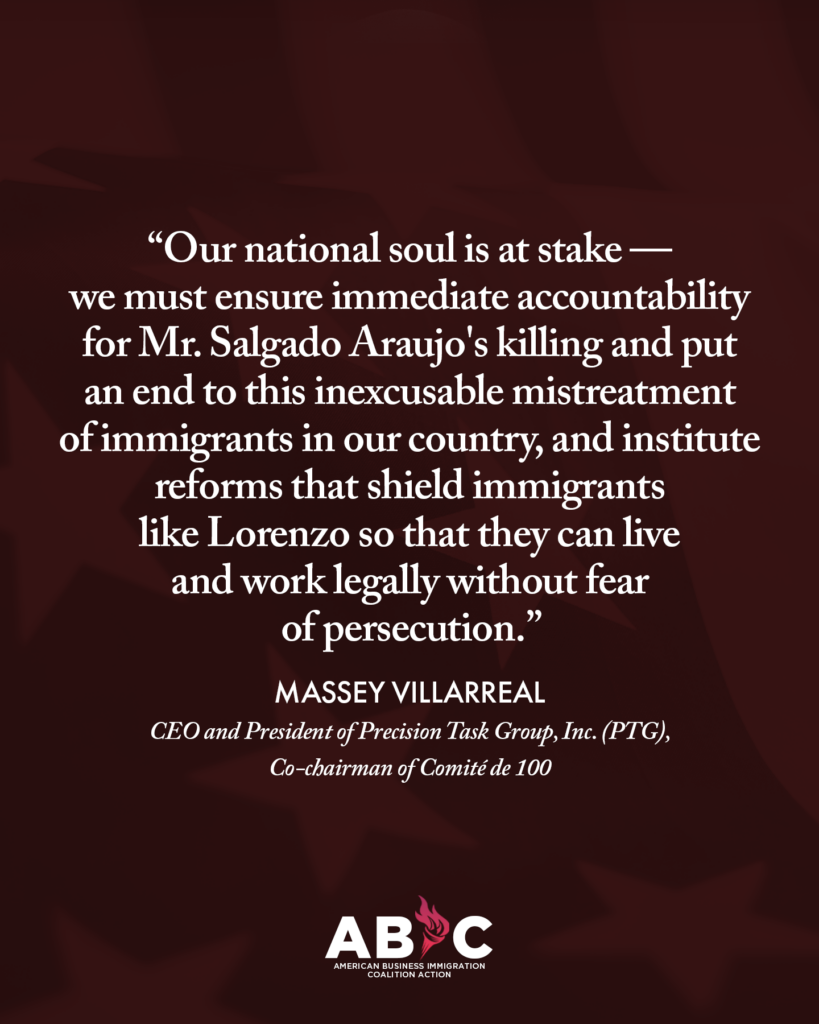
Tragedy struck the Houston community early Tuesday morning when Lorenzo Salgado Araujo, a 52-year-old father of three and a construction worker who spent 35 years building homes in the region, was fatally shot by an ICE agent in an unmarked vehicle while transporting a crew of workers to a job site.
The killing has sparked deep outrage among local business and community leaders. In response to the tragedy, Massey Villarreal, CEO and President of Precision Task Group, Inc. (PTG) and Co-chairman of Comité de 100, issued a call for federal accountability and immediate policy reform:
Border Report: Texas builders say ICE operations delaying construction
Increased federal immigration enforcement across the Rio Grande Valley is triggering severe project delays, skyrocketing building costs, and a massive sales slump for South Texas builders. The chilling effect is so severe that even U.S. citizen workers are staying home out of fear, causing standard four-month home builds to double to eight or nine months
The South Texas Builders Association (STBA), an ABIC member and partner organization, reports that aggressive enforcement tactics, including targeting construction trucks on the road and entering private residential jobsites, have terrified the local workforce, sending ripple effects throughout the local economy:

Related coverage: Fear of ICE Raids Leaves Massachusetts Construction Sites Without Workers
An aggressive federal immigration crackdown is creating labor shortages that threaten to collapse the state’s residential construction sector. According to a newly published Boston Globe report, immigrants make up roughly 25% of the state’s construction workforce. However, recent ICE activity has turned job sites into ghost towns.
The report highlights that subcontractors have responded to the extreme labor scarcity by hiking prices by 30% to 40%. The labor shortage created by the atmosphere of fear undermines the state’s long-term housing goals, threatening to permanently derail plans to build 220,000 new homes by 2035 to alleviate an ongoing housing shortage.
Inside the De-Documentation of TPS and DACA Holders
For employers across the country, the focus has shifted from anticipating future court rulings to managing the immediate economic fallout of a de-documentation crisis that is already underway and gaining momentum.
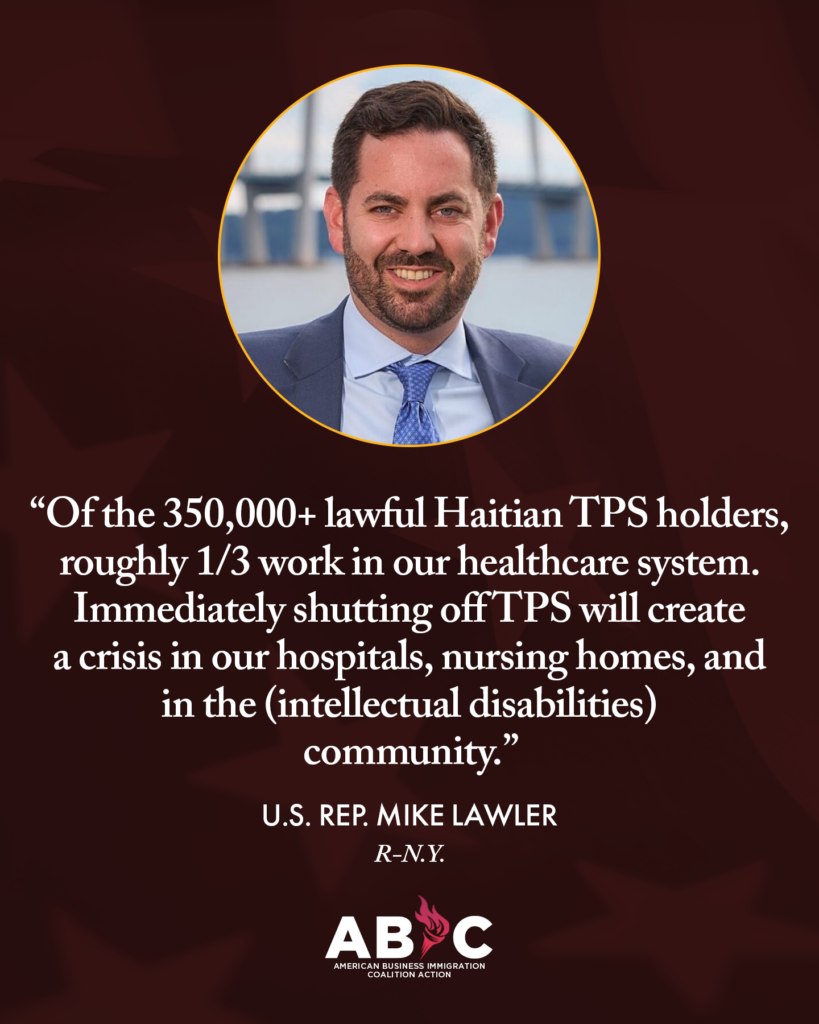
On June 25, the Supreme Court cleared the path for the administration to terminate Temporary Protected Status (TPS) for roughly 350,000 Haitians and 6,000 Syrians, putting legal work authorization for hundreds of thousands of long-term residents and workers at risk.
URGENT COMPLIANCE UPDATE FOR EMPLOYERS: On July 10, USCIS officially updated its guidance, moving the effective termination date for TPS-based work permits from Haiti and Syria to July 24. If you have employees utilizing TPS-based work permits, they remain fully eligible to continue working without disruption until July 24. If you are unsure of your specific employees’ legal status, the best course of action is always to check with your legal counsel immediately, or connect with our team for direct guidance.
At the same time, historic bureaucratic delays have pushed DACA renewal and work permit processing times well past six months, leaving employers in limbo and threatening the jobs of workers who have already been vetted, trained, and integrated into the U.S. workforce.
Coalition Highlight: Yesterday, July 9, more than 200 businesses participated in the ABIC Action webinar on the de-documentation crisis. The session addressed the current impact on businesses as they grapple with DACA processing delays, the termination of Haitian and Syrian TPS, and the need for employer legal guidance.
Amplifying these concerns, the James Beard Foundation, a core partner of the ABIC Action backed Seat the Table coalition representing restaurant, hotel, and agricultural leaders across all 50 states, issued an urgent appeal warning that the sudden loss of TPS will devastate the culinary ecosystem, read the full JBF statement here:
On healthcare, bipartisan leaders and policy experts are sounding the alarm over the severe national consequences of the ongoing de-documentation crisis:

In agriculture and food processing especially, labor instability is already affecting the broader supply chain. That pressure is landing at a moment when Americans are already struggling with high grocery bills. According to a recent national survey conducted by Global Strategy Group for The Kitchen Table Project:
Related Coverage: Bipartisan H-2A Overhaul Offers Relief to Strained Food Supply Chain
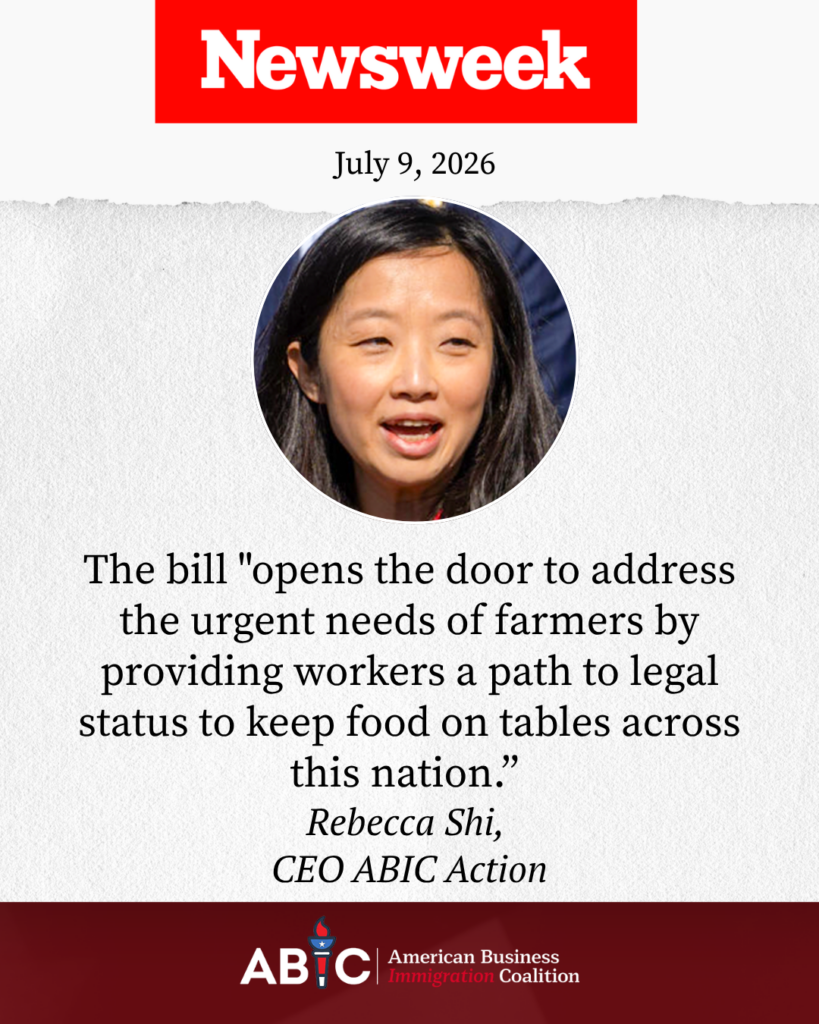
To counter the rising costs and inflation pressures throughout the nation’s food systems, a bipartisan group of lawmakers introduced the Securing Agriculture’s Workforce Act, a major H-2A visa overhaul designed to stabilize the food supply chain and rein in skyrocketing operational costs for producers. The bill directly slashes employer overhead by expanding the traditionally seasonal visa program into a year-round, 350-day labor stream for critical, continuous sectors like dairy and livestock, and creates a critical legal pathway for experienced farmworkers already in the U.S. to transition into legal status while shielding employers from liability.
The ABIC Agricultural Council strongly endorsed the bill, noting that in 2025, U.S. farms received only 182 domestic applications for nearly 415,000 advertised jobs. By replacing severe labor scarcity with a reliable, streamlined, and legal workforce, the legislation directly targets the root causes of rising production costs to ease the burden on both businesses and consumers.
More from the ABIC Network:
ABIC Member Ed Kissam: SCOTUS Affirms Immigrants Part of American Fabric
The Supreme Court’s 6–3 ruling in Barbara v. Trump struck down the administration’s Executive Order attempting to end birthright citizenship, shielding the U.S. economy from catastrophic workforce disruptions.
As ABIC Member Ed Kissam highlights, the ruling is an acknowledgment of the economic and social reality of many American communities:
“Affirmation of birthright citizenship is, in essence, a recognition of the day-to-day life in the real world of U.S. communities; that millions of immigrants — including those who have not yet managed to secure permanent residence or citizenship — live, work, and volunteer side-by-side with their U.S. born neighbors.”
This ongoing push to destabilize existing labor pools creates a severe crisis for employers, rendering long-term business planning nearly impossible. While the High Court successfully protected the next generation of American workers, business leaders must remain fiercely engaged to defend the current workforce sustaining our economy.
News Briefing:
Marketplace: How Immigration Crackdowns Hurt the U.S. Economy
A newly released interview with Wharton School professor Zeke Hernandez reveals that the administration’s escalating immigration crackdowns, marked by a staggering 10,000 ICE arrests in just a five-day stretch, will trigger devastating, long-term consequences for the American economy:
“What you’re doing here is you’re essentially creating an economy of fear. When a business closes, you can’t just snap your fingers and open it back up. Workers have moved somewhere else. The capital is gone. It takes a while for us to recover that. So, if anything, the larger long-term effects could be more damaging.”
— Zeke Hernandez, Professor at the University of Pennsylvania’s Wharton School
The data presented by Professor Hernandez reveals that historical enforcement spikes caused a drop of over 8 billion unique visits to commercial areas, resulting in up to $14 billion in lost revenue, a blow felt most acutely by independent, small-to-medium businesses.
Forbes: Study Breaks New Ground On The Benefits Of Immigration To Innovation
A new study finds that immigration has played a significant role in driving U.S. innovation by encouraging immigrants to settle in cities with strong research, business, and technology ecosystems. Examining immigration between 1880 and 1920, researchers found that areas receiving more immigrants experienced higher rates of innovation and economic growth, with immigrant inflows contributing to an 8.2% increase in GDP per capita by 1940. The study concludes that immigrants strengthened innovation not only by expanding the workforce but also by concentrating talent in regions where new ideas and technologies were more likely to emerge.
Perspectives:
USA Today Opinion: When Law Enforcement Takes on Immigration, Our Safety is the Cost
A new opinion piece in USA Today argues that recent federal immigration funding and incentives are encouraging state and local law enforcement agencies to take on immigration enforcement responsibilities, potentially diverting resources away from their core public safety missions.
The author contends that police departments, sheriffs, and prosecutors are most effective when focused on preventing crime, solving violent offenses, and maintaining trust with local communities rather than carrying out federal immigration priorities.
Citing internal ICE documents obtained by CBS News, the article notes that less than 14% of nearly 400,000 people arrested by ICE in 2025 had been convicted of or charged with violent crimes, while nearly 40% had no criminal record. The author argues these figures raise questions about whether expanding immigration enforcement partnerships is the most effective use of state and local law enforcement resources.
Get Involved
- Join one of ABIC’s Councils of 100 and let your voice be heard with your peers – sign up here. The Council of 100 is a coalition of top business leaders working to advance common-sense workforce solutions.
- Share your story: If your business is interested in engaging with the press as part of ABIC or amplifying your story on social media, take this quick survey to let us know your preferences.
- Work with us: ABIC is hiring! We are looking for a California State Director and Digital Manager to join our growing team. Learn more.
Always available: ABIC Employer Resources Folder
ABIC in the news. . .
- Newsweek: Republican Bill Seeks Major Overhaul of H-2A Visas (07/09/26)
- America’s Voice: More Than 350,000 Documented Immigrants Set To Be Stripped of Legal Status and Deported, Causing Ripple Effect In Communities (07/07/26)
- DRG News: American Business Immigration Coalition Agricultural Council Endorses the Securing Agriculture’s Workforce Act, Calls for Bipartisan Support (07/04/26)
- Sun Sentinel: What now? Florida hospitality employers seek guidance after US Supreme Court upholds TPS terminations (07/03/26)
- LegalClarity: DHS Immigration Raids Reversal: Fallout and Legal Challenges (07/01/26)
- The Bulwark: Trump Lost on Birthright Citizenship. But He’s Winning the Immigration Wars. (06/30/26)
- Bloomberg: TPS Rulings Risk Deepening Labor Shortages (06/30/26)
- Positive Aging Sourcebook: Filling the Care Gap: Immigration, Workforce, and the Future of Senior Living (06/29/26)
- Newsweek: TPS Migrants Told Apply to Stay or Leave US, Offered More Than $2,000 Help (06/28/26)
- Crossroads Today: After Supreme Court’s TPS Decision, More Than a Million Immigrants Face Scramble to Stay in US (06/26/26)
- The Washington Post: Nursing Homes, Factory Owners and Immigrants Brace for Fallout from Supreme Court Ruling (06/26/26)
- Fox: SCOTUS allows Trump administration to end TPS (06/26/26)
- McKnights: Senior Living, ‘Confounding and heartbreaking’: Provider groups decry Supreme Court decision that could see the departure of immigrant workers (06/25/26)
- CNN: Supreme Court Gives Trump Major Wins on Two Immigration Cases (06/25/26)
- Milwaukee Journal Sentinel, Wisconsin dairy farms lack workers. This Trump visa change might help (06/25/26)
- ACOM: Slow Walking DACA Renewals Hurts Dreamers and the Economy (6/23/26)
- SAN: Why are DACA renewals taking up to six months? (6/22/26)
- Politico: DACA Renewal Delays Fuel Worries Trump is Quietly Undermining ‘Dreamers’ (6/21/26)
- Texas GOP Vote: Nation’s Top Scientists Endorse The Dignity Act (06/18/26)
- Dairy Agenda Today: ADC backs Ag Workforce reform proposed by Chairman Thompson (06/18/26)
- WBAY: Las Vegas Leaders Say DACA Processing Delays Threaten Nevada’s Workforce (06/15/26)
- 13 ABC: Las Vegas Leaders Say DACA Processing Delays Threaten Nevada’s Workforce (06/15/26)
- Fox 5 Las Vegas: Las Vegas Leaders say DACA Processing Delays Threaten Nevada’s Workforce (06/15/26)
- Politico: Business and Community Leaders Urge Congress to Expedite DACA Renewals and Cease Deportations of DACA Holders (06/15/26)