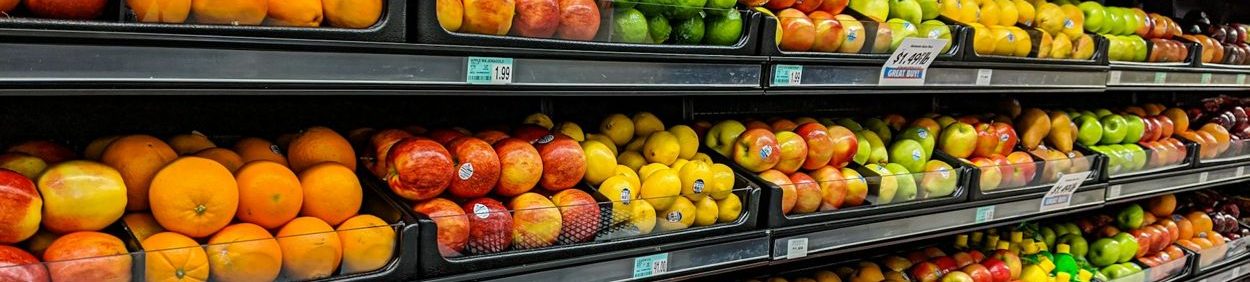
Immigrant workers grow, process and serve America’s food, build its homes and care for its families. Explore ABIC’s research on how immigration policy affects what Americans pay.
New Report · Oct. 2026
Immigration Enforcement Is Driving Historically High Food Costs
How removing long-term workers and canceling work permits is raising prices at restaurants, grocery stores and farms.
American families are paying historically high food prices that are stretching household budgets, while businesses across the country face mounting economic pressure.
Key Findings
Food affordability concerns are real. Food prices rose 3% in the 12 months ending July 2026 — 2.7% for groceries and 3.4% for restaurant meals.1Bureau of Labor Statistics
Enforcement is costing jobs. Nearly 700,000 jobs were lost in 2025 in U.S. cities targeted by ICE workplace raids, detentions and a broadening atmosphere of fear.2Brookings Institution
Federal policy is destabilizing the workforce. TPS terminations, DACA renewal delays and outdated rules make it harder to hire and retain workers essential to the food supply chain.
Work permits people already hold are being canceled. More than one million people have lost Temporary Protected Status under the current administration.3Pew Research Center
Employers report staffing effects. In a 2026 survey of 900+ operators, 55% reported negative business effects from immigration-policy changes; 37% reported reduced sales or traffic; 25% reported difficulty hiring.4National Restaurant Association
The costs reach U.S.-born workers. For every six immigrants removed from the workforce, one U.S.-born worker loses their job.5Cox & East, NBER
There is no replacement workforce. More than 100,000 new restaurant jobs are forecast for 2026, yet many of the workers being forced out have lived and worked here for decades.
Practical solutions already exist. Industry leaders, members of both parties and a growing majority of Americans back legal pathways for long-term, law-abiding immigrants.
As the national conversation around food affordability centers on inflation, gas prices and tariffs, one key factor is receiving far less attention: the role of surging immigration enforcement aimed at the long-time workers who grow, process, distribute and serve America’s food — and how those actions, and the widespread fear they trigger, leave food-processing plants, farmers and restaurateurs struggling to find and keep employees.
This report brings together government data, independent economic research and industry surveys to illustrate how that impact is being felt. The current federal approach — focused on immigration enforcement, broad revocations of employment authorization and avoidable delays in work-permit renewals — is destabilizing the United States’ immigrant workforce and adding costs to a food system that consumers can scarcely afford.
The Pressure Point
High food prices and workforce instability
Whether on grocery-store shelves or restaurant menus, Americans continue to confront food bills well above what they paid several years ago. According to the Bureau of Labor Statistics, food prices overall were up 3% from July 2025 to July 2026, with further rises anticipated — 2.7% for groceries and 3.4% for restaurants.6
Meanwhile, the Department of Homeland Security’s own data shows that 3 million immigrants have left the country since January 2025.7 With border crossings at their lowest levels in decades, the administration’s enforcement-focused efforts are increasingly targeting longtime immigrant workers — deepening labor shortages in farming, food processing, restaurants and grocery stores, and adding pressure to already high prices.
3M
immigrants have left the country since January 2025
labor-force participation among Salvadoran TPS holders — vs. 63% for the U.S. population
Center for Migration Studies
ICE has launched enforcement surges across major metropolitan areas, including Los Angeles, Chicago, the Twin Cities and New York City. But aggressive enforcement is hardly limited to big cities. Raids and arrests have disrupted rural and agricultural communities in South Texas, southwest Kansas, Pennsylvania and California’s Central Valley, as well as across South Florida. While media coverage has subsided, the economic effects continue to hit businesses, workers and consumers.
Compounding the harm are federal policies aimed at removing long-term workers from the workforce — terminating Temporary Protected Status (TPS) and slowing the DACA renewal process by months for the 500,000 young adults who rely on it to work. Salvadoran TPS holders have an 88% labor-force participation rate, making them among the country’s most economically productive groups.9 When bureaucratic delays slow their work permits, they directly harm U.S. industries and consumers. Together, this campaign is part of what is being described as the largest effort in recent American history to de-legalize immigrants of existing protections and work authorization.
Employers across critical sectors — from caregiving to construction to food service — rely on TPS holders to stay operational. As of October 2026, the administration has terminated TPS designations for 13 countries, threatening to strip more than 1 million people of their legal protections while leaving employers at risk of losing experienced workers they have relied on for years, if not decades. Beyond those directly affected, widespread fear means other employees — regardless of status — are afraid to show up for work, compounding the losses for businesses that depend on immigrant labor.
The Texas Restaurant Association, a co-convener of the Seat the Table campaign, is focusing its federal advocacy on work permits for long-term immigrant workers, noting that farms, ranches, packing plants and distribution centers are short-staffed for the same reasons its members are. In Pennsylvania, the PennAg Industries Association has pressed federal officials for reforms following the arrest of 17 poultry-industry workers in Lancaster County. The growing chorus also includes the National Restaurant Association, which has made immigration reform its top federal priority for 2026 as a consumer-affordability issue.
Most of today’s farmworkers live close to home with decades of experience employers cannot quickly replace.
What’s Driving It
Three federal policies destabilizing an already strained workforce
1. Intensifying enforcement against longtime workers. Workplace raids, arrests and widespread fear are driving experienced workers away and reducing economic activity. The Texas Restaurant Association found that 36% of operators had lost employees to enforcement, while 28% reported fewer applicants.10 During ICE’s Operation Midway Blitz in Illinois, the state restaurant association estimated a 20% workforce decline — driven by fear rather than arrests — with operators forced to limit reservations because they could not staff their businesses. After ICE operations in Kansas, Oklahoma and Texas, three major cattle-industry associations warned that enforcement was disrupting the beef supply chain, delaying shipments of thousands of cattle and threatening to drive beef prices even higher.
2. Terminating legal protections and work permits. The continued termination of TPS designations and revocation of other humanitarian protections are stripping experienced workers of their ability to work legally, even after years or decades of lawful employment. Pew Research Center estimates that more than 1 million people have been affected across more than 13 countries whose designations have ended, including hundreds of thousands of Venezuelan and Haitian workers.11 The disruptions are especially consequential for food production: in Ottumwa, Iowa, a JBS pork plant lost 200 workers when the government canceled their permits; another 80 Haitian workers were laid off from the American Foods Group plant in Long Prairie, Minnesota, in August 2025; and poultry companies on the Delmarva Peninsula warned that ending Haitian TPS could worsen shortages and raise food prices.
3. Letting DACA renewals lapse. Hundreds of thousands of DACA recipients face uncertainty as renewal delays threaten their ability to work legally. The median processing time was about 15 days in fiscal 2025; by May 1, 2026, it reached 122 days, according to USCIS, with attorneys reporting four-to-six-month waits over the summer. There is no automatic extension while a renewal is pending — a worker whose Employment Authorization Document expires before the new one arrives must be terminated by law. A Florida firefighter-paramedic who filed six months early had to resign when his permit expired; a therapist who works with autistic children has been on leave since hers lapsed. Texas alone has more than 86,000 DACA recipients.
+1.5%
in overall U.S. prices by 2028 if 1.3M workers are removed12
undocumented immigrants worked in the U.S. in 202313
Pew Research Center
“
…our very aggressive policy on immigration is taking very good, long time workers away from them, with those jobs being almost impossible to replace. … This is not good.
President Donald Trump · June 12, 2025, relaying what farmers and hotel owners had told him, two days after an ICE raid cut half the staff of a Nebraska beef processor
That raid, at Glenn Valley Foods in Omaha, hit a company that had used E-Verify — the federal online program that helps employers confirm new hires are authorized to work — for years. The fallout led ICE to pause worksite operations at farms, meatpacking plants, restaurants and hotels that week. The pause was reversed six days later: touting worksite raids as a “cornerstone” of its work, the Department of Homeland Security continues to claim there will be “no safe spaces” for industries that employ unauthorized workers.
At the Checkout
Americans are paying for the loss of immigrant workers — at the grocery store
Prices are rising fastest where the work is done by hand: in meat-processing plants and in the fields where fruit and vegetables are picked. The USDA expects seven of 15 grocery food categories to cost above their historical averages this year — beef and veal, fresh fruit, fresh vegetables, processed fruit and vegetables, fish and seafood, sugar and sweets, and beverages. The first five are harvested and picked by hand.
Seven of fifteen grocery categories are running above their historical averages in 2026.
In Kansas, a September 2026 surge in ICE enforcement targeted meatpacking plants in several rural communities, forcing plants to cancel shifts and sending a chill across the state’s agriculture and meatpacking industries, according to Matt Teagarden, CEO of the Kansas Livestock Association and chair of the ABIC Agricultural Council. More than 100 people were reportedly arrested.
“
Legal, fully documented workers were not leaving home because of the circumstances there. When those plants are disrupted, cattle back up and the cattle market drops. At the same time, there’s less beef going out to retailers and restaurants — and so beef prices go higher.
Matt Teagarden · CEO, Kansas Livestock Association; Chair, ABIC Agricultural Council
USDA’s August outlook projects Americans’ 2026 grocery bill to finish up 2.5% and restaurants up 3.6%.16 For 2027, the USDA cut its grocery forecast to 2.1% but raised its restaurant forecast to 2.7% — and notes that restaurant prices rarely come back down once labor, rent and utilities are baked into the menu. Grocery inflation skewed down only because egg prices fell 26% over the year as flocks recovered from bird flu; the USDA expects eggs to finish 2026 down 31%. Vegetables and beef, by contrast, are ending the year above their 20-year averages.
No Backfill
There is no one to replace the immigrant workforce
Employers spent decades building their workforces around long-settled immigrant communities.
Many of the workers being forced out have lived and worked in the country for decades. Unlike the largely migratory workforce that dominated agriculture in the 1990s, most farmworkers today work close to home with established families, communities and long employment histories. Employers have spent decades building their workforces around these communities: meatpacking plants in Iowa, Nebraska, Minnesota and the Delmarva Peninsula rebuilt around refugees and TPS holders after the worksite raids of 2006 and 2008. Many Honduran and Nicaraguan TPS holders have lived here since 1998; Salvadoran TPS holders, for a quarter century.
There is no replacement workforce waiting in the wings. The National Restaurant Association forecasts more than 100,000 new restaurant jobs in 2026, even as workforce availability remains among operators’ top concerns.17 The Federal Reserve Bank of Dallas has attributed Texas’ flat 2025 employment growth partly to slower immigration constraining labor supply.18 For employers, losing longtime immigrant workers means losing years of experience and institutional knowledge at a time when they already struggle to find enough people to keep their businesses running.
The Ripple Effect
When enforcement hits the workplace, citizens lose jobs too
The impact of arresting and deporting immigrant workers reverberates far beyond those taken away. For every six undocumented men who left the workforce, one U.S.-born man lost his job, according to an April 2026 National Bureau of Economic Research paper by economists Elizabeth Cox and Chloe East.19 In areas where ICE arrests surged, employment fell both among remaining likely-undocumented workers and among U.S.-born men with a high school education or less in the same sectors — and the authors found no evidence that employers raised wages to attract replacements. Applying those estimates to city-level data, the Brookings Institution put the total at 668,000 jobs lost in targeted places, including at least 50,000 held by U.S.-born workers.
6-to-1
immigrants removed per U.S.-born job lost
Cox & East, NBER
$1.2B
lost retail & restaurant activity in Cook County after Operation Midway Blitz20
Univ. of Illinois Chicago
$106M
in lost wages in Minneapolis–St. Paul after a two-month surge
Upjohn Institute
The consequences reach beyond staffing. Enforcement surges also chill demand and consumer behavior. UCLA researchers documented 46,000 fewer customer visits and $3.2 million in business losses near nine Los Angeles enforcement sites within two weeks of the June 2025 raids.21 After Operation Metro Surge, employment in the Minneapolis–St. Paul area fell 2.8%, according to the W.E. Upjohn Institute22, and one in five Minnesota businesses reported lower headcounts because of enforcement fear, according to the Minneapolis Fed. Miguel Hernandez and Rosa Zambrano, who have run El Tejaban Mexican Grill in Richfield, Minnesota, for nearly twenty years, told NPR they expect to close when their lease ends because of the climate of fear. The same dynamic is playing out on farms: an American Enterprise Institute review found that enforcement reduces agricultural output, pushes acreage out of labor-intensive fruits and vegetables, and increases food imports23 — exactly the categories now running above their historical averages.
Public Opinion
Americans feared higher costs from mass deportations. It’s worse than they expected.
Public concern about the economic consequences of failing to deliver long-overdue immigration reform is not new. An April 2025 Pew Research Center survey found that 42% of adults expected deportations to raise food prices in their own community — more than for any other category of cost.24 Nearly 60% of Americans told Pew in June 2025 that they disapproved of ending TPS protections for legal, law-abiding, long-standing members of their communities.25 As prices climb, employers across the political spectrum have intensified their calls for practical immigration solutions that protect their workforce and prevent further shocks from reaching consumers.
The Solution
Work permits for long-term immigrants: a solution supported by both parties
Lower food prices aren’t possible without immigrant labor. Securing the border, enforcing the law and deporting individuals who have committed serious crimes can go hand in hand with providing legal protections for long-term, law-abiding immigrants who work, pay taxes and contribute to their communities. A lasting legislative solution remains the ultimate goal — offering a path to legal status for essential workers would increase U.S. GDP by billions of dollars over ten years, create hundreds of thousands of jobs and expand tax revenues.
The approach enjoys broad and growing public support, including among Latino voters in battleground states. A September 2026 bipartisan poll by BSP Research and Shaw & Co. for ABIC Action and American Families United found that 75% of Latino voters surveyed were more likely to support a candidate who backs work permits for long-term undocumented immigrants who have been working and paying taxes.26 The Dignity Act — a House bill that would give long-term undocumented workers with clean records a renewable legal status — has 40 co-sponsors, 20 from each party, and more than 100 organizational endorsements.
75%
of Latino voters more likely to back a candidate supporting work permits for long-term workers
BSP Research / Shaw & Co., 2026
40
bipartisan co-sponsors of the Dignity Act — 20 from each party
U.S. House
60%
of Americans disapproved of ending TPS protections
Pew Research Center
In the House, legislators can pass:
The Dignity Act of 2025 — a renewable legal status to work for long-term undocumented workers with clean records.
The Dream & Promise Act of 2025 — a path to citizenship for Dreamers and those with TPS.
The Securing Agriculture’s Workforce Act of 2026 — expanded work permits for agricultural workers.
In the Senate, legislators can pass:
The Dream Act of 2025 — a path to citizenship for Dreamers and those with TPS.
The State-Sponsored Visa Pilot Program Act of 2026 — discretion for states to design work-permit programs that fit their economic and labor needs.
Pursuing a permanent solution must go hand in hand with protecting existing programs that let immigrants live and work legally. Rather than blindly ending TPS and delaying DACA renewals, the administration should extend all TPS designations that meet the legal requirements, ensure timely DACA renewals, and provide automatic extensions of work authorization while applications are pending. Any worksite enforcement should prioritize genuine public-safety threats rather than disrupting businesses and targeting law-abiding workers.
The enforcement focus of ICE and the administration does more than terrorize immigrants — it means Americans spend more to put food on their tables, and it further destabilizes multiple struggling American industries.
Lower food prices aren’t possible without the workers who grow, pick and serve America’s food.
About the American Business Immigration Coalition (ABIC)
ABIC is a bipartisan coalition of over 2,200+ CEOs, business owners, and trade associations across more than 30 states. ABIC promotes common sense immigration reform that advances economic competitiveness, provides companies with both the high-skilled and low-skilled talent they need, and allows the integration of immigrants into our economy as consumers, workers, entrepreneurs, and citizens.
Sources & Notes
U.S. Bureau of Labor Statistics, “Consumer prices up 3.4% over the year in July 2026,” The Economics Daily, Aug. 14, 2026. bls.gov↑
Marcela Escobari, Ian Seyal & Paul Beach, “Shock, awe, and economic fallout: The employment effects of ICE enforcement in US cities,” Brookings, May 29, 2026. brookings.edu↑
Carolyne Im & Mia Hennen, “Second Trump administration has ended Temporary Protected Status for most immigrants who had it,” Pew Research Center, Aug. 12, 2026. pewresearch.org↑
National Restaurant Association, 2026 State of the Restaurant Industry, Feb. 11, 2026. restaurant.org↑
Elizabeth Cox & Chloe N. East, “Labor Market Impacts of ICE Activity in Trump 2.0,” NBER Working Paper 35129, June 2026. nber.org↑
U.S. Bureau of Labor Statistics, “Consumer prices up 3.4% over the year in July 2026,” The Economics Daily, Aug. 14, 2026. bls.gov↑
U.S. Department of Homeland Security, “DHS Sets the Stage for Another Historic, Record-Breaking Year Under President Trump,” Jan. 20, 2026. dhs.gov↑
Stephanie Kramer & Jeffrey S. Passel, “What the data says about immigrants in the U.S.,” Pew Research Center, Aug. 21, 2025. pewresearch.org↑
Center for Migration Studies, “State-Level Estimates and Characteristics of Temporary Protected Status Recipients,” accessed Oct. 22, 2026. cmsny.org↑
Texas Restaurant Association, “Economic Insights Q2 2026,” Aug. 2026. txrestaurant.org↑
Carolyne Im & Mia Hennen, “Second Trump administration has ended TPS for most immigrants who had it,” Pew Research Center, Aug. 12, 2026. pewresearch.org↑
Warwick J. McKibbin, Megan Hogan & Marcus Noland, “Trump’s deportation plans would cause lower US employment and GDP than otherwise,” PIIE Charts, Oct. 4, 2024. piie.com↑
Jeffrey S. Passel & Jens Manuel Krogstad, “U.S. Unauthorized Immigrant Population Reached a Record 14 Million in 2023,” Pew Research Center, Aug. 21, 2025. pewresearch.org↑
U.S. Bureau of Labor Statistics, “Average Price: Beef, Round Steak, USDA Choice, Boneless [APU0000703112],” FRED, Federal Reserve Bank of St. Louis, accessed Oct. 22, 2026. fred.stlouisfed.org↑
U.S. Bureau of Labor Statistics, “Consumer prices up 3.4% over the year in July 2026,” The Economics Daily, Aug. 14, 2026. bls.gov↑
Russell Knight et al., Livestock, Dairy, and Poultry Outlook: August 2026, LDP-M-386, USDA Economic Research Service, Aug. 18, 2026. ers.usda.gov↑
National Restaurant Association, “Elevated costs continue to pressure restaurant profitability,” July 8, 2026. restaurant.org↑
Federal Reserve Bank of Dallas, “Dallas Fed: Texas employment growth projected to increase in 2026,” news release, Feb. 6, 2026. dallasfed.org↑
Elizabeth Cox & Chloe N. East, “Labor Market Impacts of ICE Activity in Trump 2.0,” NBER Working Paper 35129, June 2026. nber.org↑
University of Illinois Chicago, Economic Fallout of Operation Midway Blitz on Cook County Retail and Hospitality, Urban Transportation Center, 2026. ↑
UCLA Latino Policy & Politics Institute, “The Cost of Fear: The Impacts of Immigration Enforcement on Small Businesses and Latino Entrepreneurs in LA County,” 2026. latino.ucla.edu↑
W.E. Upjohn Institute for Employment Research. upjohn.org↑
American Enterprise Institute, Agricultural Output and State-Level Enforcement: Economic Adjustments in Labor-Intensive Crop Markets, April 2025. ↑
Luis Noé-Bustamante & John Gramlich, “42% of U.S. adults expect deportations to lead to higher food prices in their area,” Pew Research Center, Apr. 15, 2025. pewresearch.org↑
Carolyne Im & Mia Hennen, “Second Trump administration has ended TPS for most immigrants who had it,” Pew Research Center, Aug. 12, 2026. pewresearch.org↑
BSP Research & Shaw & Company, “Latino voter 2026 battleground state poll,” memorandum to ABIC and American Families United, Sept. 16, 2026. abic.us↑