

U.S. Representatives Steven Horsford (NV-4) and Dina Titus (NV-1) joined ABIC Action, the National Association of Minority Contractors (NAMC), construction executives, labor leaders, and workforce advocates Monday in Las Vegas to call for urgent action to protect Dreamers, stabilize the workforce, and strengthen Nevada’s economy.
Speakers warned that DACA processing times, which once averaged just a couple of months, now often exceed six months, forcing many Dreamers to lose their work authorization and, in some cases, their jobs while awaiting renewal.
[INSERT PHOTO COLLAGE FROM THE PRESSER]
Nevada’s more than 10,000 DACA recipients contribute an estimated $820 million annually to the state’s economy, pay more than $61 million in state and local taxes, and have over $500 million in spending power, Emiliano Valencia, Texas Deputy Director for ABIC Action, highlighted.
The event also featured Dreamers who shared how delayed renewals have left them uncertain about their futures. Norma Flores Moreno, a Culinary Union member whose DACA status expires in September, said she submitted her renewal in March but is still waiting for a decision.
“This is not a failure of Dreamers. This is a failure of the system. When people who have complied with every requirement lose their jobs because paperwork isn’t processed on time, that hurts workers, families, employers, and our economy,” said Congressman Steven Horsford (NV-4). Watch highlights from his remarks
“DACA recipients are part of Nevada’s workforce, tax base, and economic future. They contribute millions in state and local taxes, support key industries, and help keep our communities strong,” said Congresswoman Dina Titus (NV-1). Watch highlights from her remarks
Speakers called on the administration to expedite DACA renewals and urged Congress to provide a permanent legislative solution for Dreamers, such as the Dream and Promise Act, emphasizing that processing delays are disrupting workers, employers, and Nevada’s economy.
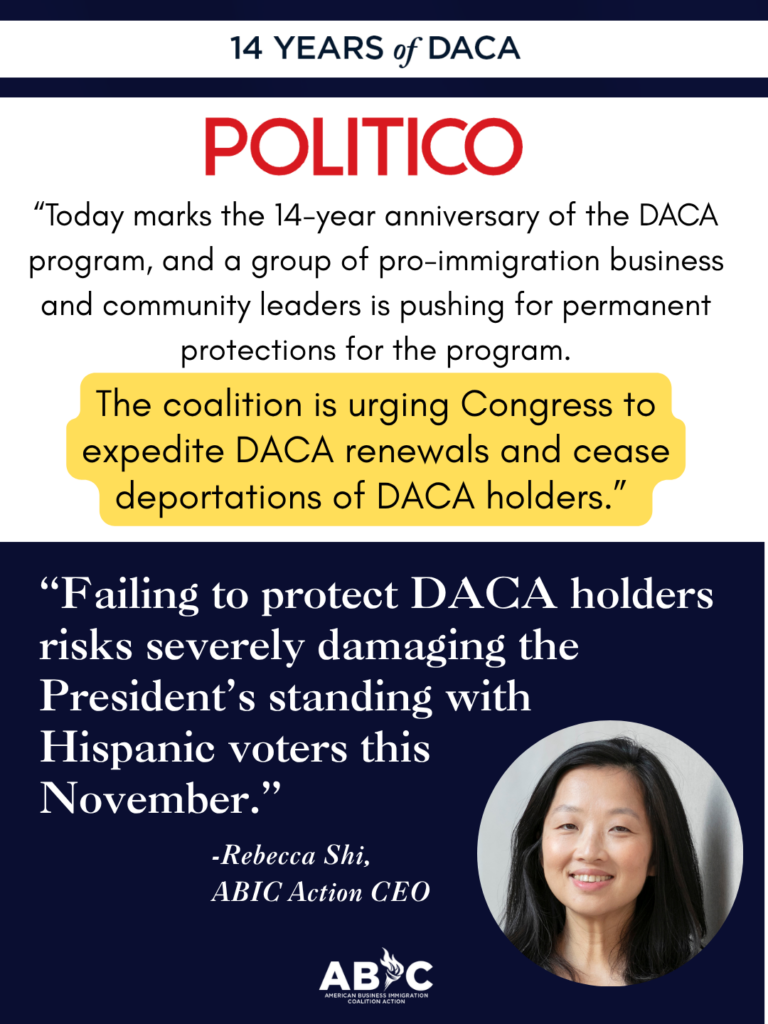
Related coverage: On the ground in Nevada, we joined one of many efforts to protect our workforce and fix critical DACA renewal delays. Additionally, for the anniversary of DACA, Politico featured ABIC Action’s letter signed by more than 140 employers urging Congress and the administration to expedite long-delayed DACA renewals, halt deportations of DACA holders, and pass long-term protections for Dreamers.
Rebecca Shi, CEO of ABIC, also emphasized the political implications of inaction:
More from the ABIC Network:
Chairman GT Thompson Talks New Workforce Legislation with ABIC Agricultural Council
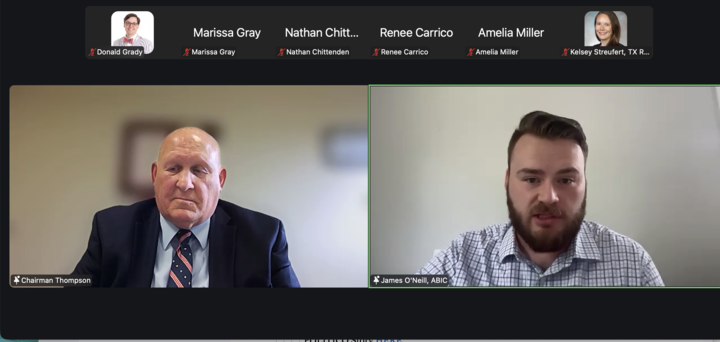
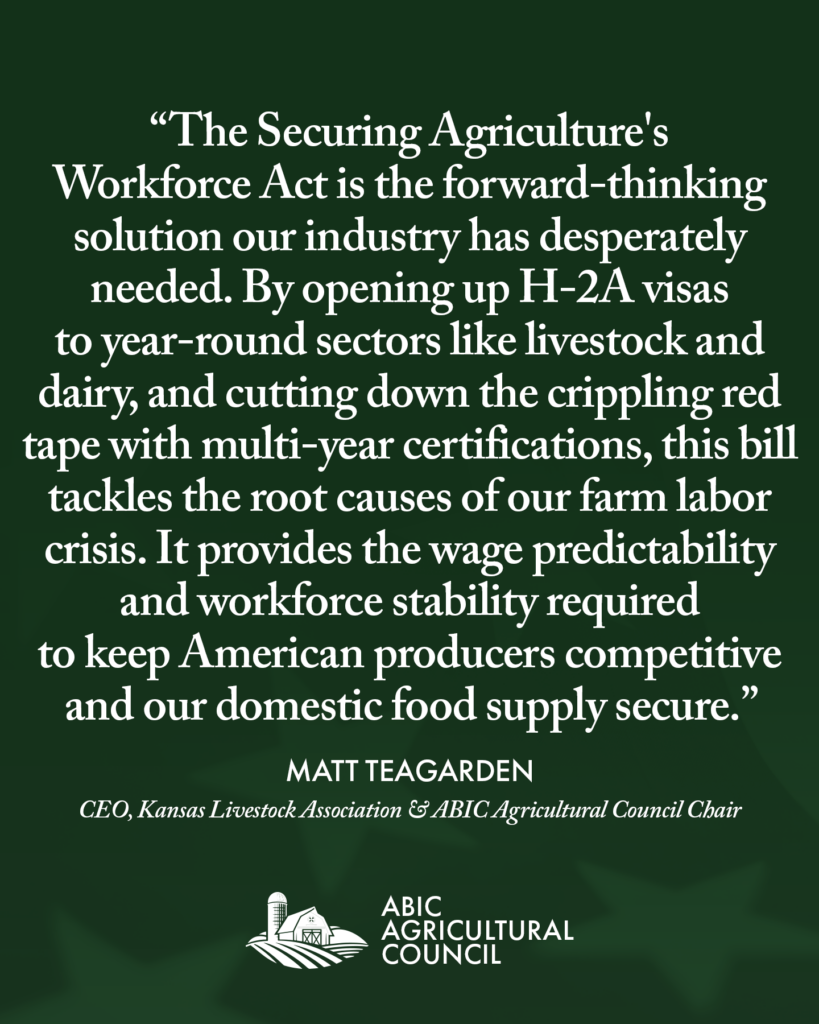
This week, the ABIC Agricultural Council met with Representative Glenn ‘GT’ Thompson, Chairman of the House Agriculture Committee, to discuss the Securing Agriculture’s Workforce Act. The proposal would expand the H-2A visa program to include year-round agricultural work and establish a legal, temporary status with work authorization for long-term undocumented agricultural workers, though it does not provide a pathway to citizenship.
During the meeting, the ABIC Agricultural Council endorsed Chairman Thompson’s legislative language and applauded him for including work permits for long-term skilled immigrant workers. The meeting followed ABIC’s efforts to convene more than 100 farmers and ranchers in support of the legislation, encouraging agricultural leaders to help secure additional original co-sponsors for the bill.
More on ABIC Agricultural Council endorsement:
“Chair Thompson continues his long record of protecting, supporting and strengthening our food system, farm businesses, ag workforce and rural communities with this common sense legislation. SAWA not only addresses the needs and necessities of the businesses, farms and ranches that continue to [be] the backbone of our economy and the essential pillar of national security but also safeguards the committed, skilled and experienced ag workforce that drives the success of America. The Congressman’s fierce advocacy for the people stewarding our lands, herds, flocks, and food value chain is an absolute that dairy farmers like me are so grateful for and has more than earned our support for the Securing Agriculture’s Workforce Act.”
— Jenni Tilton-Flood Flood Brothers, LLC | Chair, ABIC Agricultural Council Communications & Messaging Committee
“Working with ABIC has allowed our voice to be heard in finding solutions for America’s ag labor crisis. From hosting Congressman Flood on a farm visit to meeting face-to-face with Chairman Thompson, we have a direct line to lawmakers to push for the common sense fixes our industry desperately needs. We are incredibly grateful for this partnership and the vital work ABIC does.”
— Darren Mueller, Manager, Prairieland Gold | Ohlde Family Farms | Prairieland Dairy

Related Coverage
ADC President and PA Dairy Farmer Walt Moore Joins National ABIC Briefing on SAWA
Chester County, Pennsylvania dairy farmer and American Dairy Coalition (ADC) President Walt Moore joined Chairman Thompson in the Securing Agriculture’s Workforce Act (SAWA) briefing:
“This issue affects every segment of agriculture, but for dairy farms it is especially critical because our labor needs are year-round,” said Moore. “Many farms have invested years in training experienced employees who are essential to animal care, herd health and daily operations. Maintaining that workforce while creating a workable future labor system is vital to food production.
News Briefing:
NY Times: Internal Emails Raise Questions About D.H.S. Ending Haiti Protections
Newly released internal documents from last year indicate that the Department of Homeland Security (DHS) failed to consult the State Department before terminating Haitian Temporary Protected Status (TPS), bypassing a process required by law. The lack of consultation became central to the ongoing Supreme Court battle over whether the administration can immediately halt protections for Haitians under TPS.
The documents also reveal that career officials recommended extending TPS due to Haiti’s worsening humanitarian conditions, but those recommendations were overruled by political leadership. Attorneys representing Haitian TPS holders argue the records show the administration predetermined the outcome rather than following the legally required review process.
The decision to end TPS for Haitians holds major economic implications, as eliminating protective status could remove work authorization for hundreds of thousands of employees, raising concerns among employers about worsening labor shortages in sectors including healthcare, construction, hospitality, and elder care.
NY Times: Trump Administration Says It Will Restart Asylum and Immigration Processing
The Trump administration announced it will resume processing asylum applications after Federal Judge John McConnell of Rhode Island ruled that its months-long suspension of cases for applicants from dozens of countries was unlawful. The ruling challenged the administration’s global hold on asylum applications filed with USCIS and its freeze on immigration applications from 39 countries, which had left thousands of immigrants in legal limbo.
The policy also disrupted workforce participation by delaying work authorization for many applicants, preventing them from legally working while their cases remained pending. Although the administration will comply with the court order and resume processing applications, it said it will continue to appeal the ruling.
One year after 76 employees were detained during an immigration raid at Glenn Valley Foods, a meat processing plant, South Omaha’s business district continues to face significant economic challenges. Although federal officials initially alleged workers at Glenn Valley had engaged in “massive identity theft” by using stolen Social Security numbers to obtain employment, only one worker was ultimately charged with identity theft.
A survey of 40 local business owners conducted by the Nebraska Hispanic Chamber of Commerce found that fear, uncertainty, and misinformation surrounding immigration enforcement have affected employees, customer traffic, and spending, leaving many businesses struggling to recover.
“Challenges in workforce retainment have caused six businesses to shut down,” said Irma Villezcas, a grocery store owner and chair of the South Omaha Business Association. Douglas County Board Chairman Robert Garcia similarly criticized the raids, stating, “If they’re meant to make our community safer, they’re not doing that.”
WUNC: Immigrant Labor Shortages Stand to Harm NC’s Urban Economies, Kenan Institute Report Says
A recent report from the Kenan Institute for Private Enterprise at UNC Chapel Hill found that declining international migration is contributing to labor shortages across North Carolina, particularly in labor-intensive industries such as construction, manufacturing, hospitality, and caregiving. Census data show that “international migration to the U.S. dropped historically from 2.7 million to 1.3 million” between July 2024 and June 2025, reducing the supply of workers in sectors that have long relied on immigrant labor.
Sarah Dickerson, research professor at the Kenan Institute of Private Enterprise and author of the report, notes that “businesses and consumers are likely to feel these effects through a tighter labor market and higher costs” as employers struggle to fill open positions and complete projects.
Construction leaders say those impacts are already becoming apparent. Brian Turmail of the Associated General Contractors of America warned that “not only are you going to get higher no-show rates, but you’re going to have more and more firms that don’t have enough people to bid on construction projects.”
USA TODAY: Families Fear What’s Next in Pending Trump Birthright Citizenship Case
The U.S. Supreme Court is currently weighing a January 2025 executive order to end automatic birthright citizenship for children of temporary or undocumented immigrants. Advocates warn the ruling could eventually allow the administration to strip citizenship from millions of adults born to undocumented parents, potentially leaving 255,000 babies stateless annually and disrupting the nation’s 4.7 million mixed-status families.
Affected families and local business owners argue that rolling back these protections fundamentally violates the country’s core promise of safety, legal consistency, and economic opportunity. “It feels like all bets are off the table for anyone at this point, and what’s happened so far is so unprecedented,” said Temu Otting, who owns a union print shop in suburban Denver.
Perspectives:
LA Times Opinion: New Rules Squeeze Money From Asylum Seekers While Preventing Them From Working
Recent updates to immigration policy introduced last month mandate a $102 filing fee for asylum seekers, and applicants are now restricted from requesting work authorization until one full year has passed since their initial application submission.
Tess Feldman, a practicing attorney in the Los Angeles metropolitan area and adjunct professor at Southwestern Law School, wrote in the LA Times that these changes extend the waiting period to apply for a work permit from five months to one year, not including the additional processing time, which often takes another year.
“A $100 fee may sound modest. A delay for a work permit application may seem manageable. But together, they create a system that demands payment from vulnerable people the government has made legally unable to work,” wrote Feldman.
She also noted how “for people like my clients, the choice becomes impossible: work illegally to survive, abandon a lawful asylum claim for the entire family or go without basic necessities while waiting.”
Get Involved
- Join one of ABIC’s Councils of 100 and let your voice be heard with your peers – sign up here. The Council of 100 is a coalition of top business leaders working to advance common-sense workforce solutions.
- Share your story: If your business is interested in engaging with the press as part of ABIC or amplifying your story on social media, take this quick survey to let us know your preferences.
- Work with us: ABIC is hiring! We are looking for a California State Director and Digital Manager to join our growing team. Learn more.
Always available: ABIC Employer Resources Folder
ABIC in the news. . .
- Dairy Agenda Today: ADC backs Ag Workforce reform proposed by Chairman Thompson (06/18/26)
- WBAY: Las Vegas Leaders Say DACA Processing Delays Threaten Nevada’s Workforce (06/15/26)
- 13 ABC: Las Vegas Leaders Say DACA Processing Delays Threaten Nevada’s Workforce (06/15/26)
- Fox 5 Las Vegas: Las Vegas Leaders say DACA Processing Delays Threaten Nevada’s Workforce (06/15/26)
- Politico: Business and Community Leaders Urge Congress to Expedite DACA Renewals and Cease Deportations of DACA Holders (06/15/26)
- LiveNow Fox: House Lawmakers Remarks on Housing Affordability (06/04/26)
- FOX 13 Tampa: ‘Dignity Act’ Targets Housing Affordability Crisis(06/04/26)
- FOX 30 Jacksonville: The Dignity Act and Housing Affordability (06/04/26)
- FOX 43 Harrisburg: Dignity Act and Housing Affordability (06/04/26)
- Forbes: America Is Shrinking Its Workforce At The Worst Possible Time (5/28/2026)
- Forbes Editorial: America Is Shrinking Its Workforce At The Worst Possible Time (05/28/26)
- Fox News: GOP infighting erupts over immigration bill that would shield millions from deportation (04/24/26)
- Press Release: Rep. María Elvira Salazar Joins Bipartisan Lawmakers and Real VoICEs from Across America to Demand Action on the Dignity Act (04/22/26)
- Y100.7 Miami: Florida Lawmaker Offers Immigration Solution with DIGNITY Act (04/22/26)
- Key Biscayne Independent: Despite strong GOP opposition, Salazar keeps pressing for ‘Dignity’ (04/22/26)
- POLITICO: Rival PACs line up to target GOP cosponsors of immigration bill (04/21/26)
- POLITICO: Poll: Trump’s immigration message changed. Voters’ opinions have not. (04/18/26)
- The Washington Post: House opposes Trump on immigration with move to help Haitians (04/17/26)
- Main Public: Immigration Raids Rattle Some Maine Employers and Business Groups Amid Workforce Shortage (04/07/26)
- Barn Raiser: Farmers, Facing Labor Shortages, Push for Immigration Reform (04/02/26)
- Politico: Playbook; All about that base (03/29/26)
- WFMZ: Reading town hall focuses on ‘Dignity Act’ immigration proposal (03/26/26)
- WPLG (Local 10 Miami): Lawmakers, Business and Faith Leaders Unite Behind Dignity Act, Launch National Dignity Tour (03/26/26)
- La Opinion: Legisladores anuncian una gira nacional para impulsar la Ley de Dignidad en apoyo a los inmigrantes (03/26/26)
- Nation’s Restaurant News (Syndicated by Yahoo!Finance): Why restaurant industry leaders are pushing for updated immigrant work permit legislation (3/10/26)
- FOX KDFW-TV: North Texas food leaders back Dignity Act to solve immigration labor shortage (3/10/26)
- NBC KXAS-TV: Texas food leaders urge work permits to curb labor shortages, rising food costs(3/10/26)
- ABC KVUE-TV (Syndicated by Yahoo!News): Food industry leaders urge Congress for immigrant work permits amid deportation concerns (3/10/26)
- CBS: Texas DACA recipients on edge awaiting work authorization ruling (3/9/26)
- CBS: Texas Latino community leaders warn immigration policy could shift Hispanic vote in midterms(3/5/26)