
A wave of federal immigration restrictions announced this week is threatening U.S. businesses, creating ripple effects for the broader economy and everyday Americans struggling with an ongoing affordability crisis.
The administration’s new measures to revoke B1/B2 tourist and business visas issued between 2016 and 2026 for individuals who have since claimed asylum, a worldwide halt to all immigrant visa appointments at U.S. embassies and consulates, and a newly proposed standalone $103,265 fee on high-skilled H-1B petitions.
Estimates project that the H-1B fee alone will inflict a significant economic impact on 76% of small businesses.
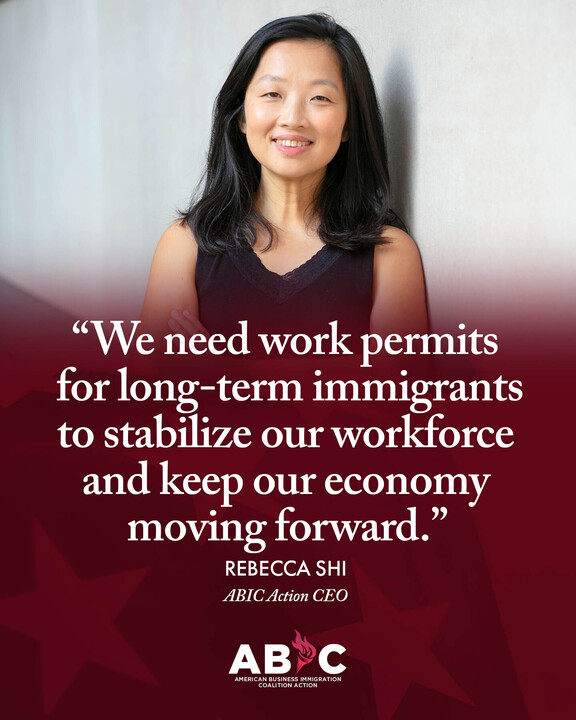
Business leaders emphasize that rather than shutting doors and shrinking the labor pool, the federal government must implement practical solutions, such as expanding work permits for long-term immigrants to stabilize local workforces, curb inflation, and keep the economy moving forward.
ICE Arrests Skyrocket in July
A surge in immigration arrests this summer has swept up tens of thousands of individuals who had not previously been the focus of the administration’s mass deportation campaign.
According to federal data obtained by the Deportation Data Project and analyzed by The New York Times and The Associated Press, ICE arrests reached record highs with 43,000 arrests in June and 49,571 in July, a 70% jump from February and only 4% with a criminal conviction.
A majority of the immigrants arrested in July were accused of violating civil immigration laws rather than being charged with or convicted of a crime. The share of arrested individuals with a past violent criminal conviction fell to less than 4%, while ICE increasingly targeted people married to U.S. citizens, individuals pursuing asylum claims, and those whose temporary legal protections had been revoked.
While the administration defended the expansion as fulfillment of its promise to enforce the law, the scale of the operation has drawn rare pushback from within Republican ranks.
Nebraska U.S. Rep. Don Bacon criticized the administration’s tactics in Newsweek, arguing that officials had “overreached” and gone after individuals with deep community ties who pose no threat to public safety.
Comite de 100: The Latino Vote
As the November midterm elections approach, the rising economic power and growing political engagement of the Latino community are positioned to act as a decisive force in close races nationwide.
Fueled by kitchen-table pressures, such as the rising cost of living and anxieties surrounding immigration enforcement, Latino voters are demanding outreach from both political parties around common-sense immigration solutions like work permits for long-term immigrants.

As Axios reports, kitchen-table concerns are increasingly colliding with federal immigration crackdowns. Organizations like UnidosUS point out that fear surrounding enforcement and persistent inflation are driving buyers’ remorse among some Hispanic voters who supported the administration in 2024.
In Texas, where President Donald Trump made historic gains with Hispanic voters in 2024, recent summer polling covered by outlets like Fox News and Emerson College shows Democratic Senate nominee James Talarico peeling away vital Hispanic support from the GOP. While individual polls vary on the exact margin of the shift, all point in the same direction, putting Republicans on alert.
Ag Council Chair Matt Teagarden on NPR Highlights Realities of Farm Labor Squeeze
The broader ripple effects of federal enforcement and economic policies are hitting the heart of the U.S. agricultural sector, where producers are finding it increasingly difficult to keep operations staffed.
Matt Teagarden, CEO of the Kansas Livestock Association and Chair of the ABIC Agricultural Council, recently joined NPR to spotlight these workforce pressures, pointing out how compounding policy shifts and enforcement actions are impacting rural communities:

Agricultural leaders emphasize that livestock operations cannot simply pause production, with many businesses operating 24/7 year-round. To protect family farms and keep doors open for America’s agriculture producers, solutions like the Securing Agriculture’s Workforce Act (SAWA) are urgently needed to provide the reliable, legal tools like work permits for immigrants that producers are in need of.
Legal work permits serve as a direct defense against grocery inflation and a growing reliance on foreign imports; allowing domestic production to drop only makes food more expensive for families and punishes American farmers and producers.
Faith Leaders Support El Salvador TPS as Expiration Threatens Businesses and Workers
The September 9 expiration of Temporary Protected Status (TPS) for El Salvador is rapidly approaching, and this week a broad coalition of more than 270 faith leaders and organizations, including U.S. bishops, Catholic groups like the Catholic Legal Immigration Network (CLINIC), sent an urgent appeal to President Trump, Secretary of State Marco Rubio, and Homeland Security Secretary Markwayne Mullin warning that sending hundreds of thousands of Salvadoran TPS holders back into an unstable country is a danger to individuals and would cause severe humanitarian consequences:

This moral appeal aligns directly with a push from ABIC Action and business owners across the country, highlighting that Salvadoran TPS holders are an indispensable pillar of the American economy.
Labor force participation sits at 90 percent as these TPS holders are actively engaged in the U.S. labor market, contributing $5.4 billion to the U.S. Gross Domestic Product annually, and paying $1.5 billion each year in combined federal, state, and local taxes, funding Social Security and critical public infrastructure.
The immediate cost of detaining and removing these individuals is estimated at $3 billion, ignoring the broader fiscal damage of lost tax revenue, reduced productivity, and the operational chaos inflicted on businesses forced to suddenly replace skilled workers.
Sign ABIC’s Letter to Extend Work Permits for El Salvador TPS holders
Restaurants Hit Hard by Workforce Shortages
Immigration enforcement is compounding workforce pressures for Texas businesses, with a recent survey revealing that 36% of restaurant operators have lost employees due to enforcement activity.
According to second-quarter data from the Texas Restaurant Association, the fallout extends beyond direct staff losses: 28% of operators reported fewer applicants or declined job offers, and 26% saw customer traffic drop as community members grew fearful of going out in public.
The findings underscore broader operational strains across the industry, where fewer than half of surveyed businesses, just 47%, report having the staff they need.
At the same time, 81% of operators noted rising labor costs compared to the previous year, alongside persistent increases in food and operating expenses.
With only 54 out of 100 on the association’s overall outlook index, Texas foodservice operators continue to navigate an unpredictable economic environment where immigration enforcement and labor shortages directly threaten business stability.
Perspectives
Miami Herald Editorial Board: Rep. Maria Elvira Salazar says Trump is ‘Playing with Fire’ on Immigration. Listen Up, GOP
Miami Republican U.S. Rep. Maria Elvira Salazar has grown increasingly blunt in her disagreement with mass deportation efforts and the toll they take on Republicans among Hispanic voters: “Mr. President, listen to what I’m telling you, sir: You’re a smart guy — you are playing with fire,” she said during an interview with the New Yorker Radio Hour podcast in late July.
Salazar supports President Trump, but her criticism reflects the political reality of representing a district that is 73% Hispanic. She was one of only two Republicans to sign a discharge petition, a procedural tool requiring 218 signatures to force an up-or-down vote on the bipartisan “American Dream and Promise Act.” Co-sponsored by Rep. Sylvia Garcia (D-Texas), which would grant permanent status to eligible Dreamers and protect Temporary Protected Status (TPS) holders from nations in turmoil, such as Venezuela, Haiti, and El Salvador.
While the discharge petition currently sits at 210 signatures, with Pennsylvania Republican Brian K. Fitzpatrick as the only other GOP co-signer.
“Congress must act because we cannot keep governing immigration through temporary executive actions that change every time the White House changes hands,” Salazar said.
Get Involved
- Join one of ABIC’s Councils of 100 and let your voice be heard with your peers – sign up here. The Council of 100 is a coalition of top business leaders working to advance common-sense workforce solutions.
- Share your story: If your business is interested in engaging with the press as part of ABIC or amplifying your story on social media, take this quick survey to let us know your preferences.
- Work with us: ABIC is hiring! We are looking for a California State Director and Digital Manager to join our growing team. Learn more.
Always available: ABIC Employer Resources Folder
ABIC in the news. . .
- NPR: Trump’s economic policies hit Iran, Canada and U.S. workers (08/24/26)
- AG Bull: Odds for Farmer Aid and an Ag Labor Bill Before This Congress Runs Out (08/23/26)
- The Ford Foundation: Immigrant Talent Powers the American Economy (8/17/2026)
- Houston Public Media: TPS recipients hope a potential change of power in Congress provides relief from deportation (8/17/2026)
- McKnights Senior Living: ‘Surge of advocacy’ seeks to secure work authorization for former senior living and care employees (8/16/2026)
- San Antonio Current: Study: Trump’s mass deportations will cost Bexar County taxpayers more than $1.13 billion through 2028 (08/10/26)
- CNN: Ankle monitors, arrests and lost jobs: Inside the new realities many Haitians in the US are facing (08/09/26)
- South Bend Tribune: Immigrants play key role in U.S. economy, experts say (08/09/26)
- Bisnow: Senior Housing Sector Faces New Problem In Massachusetts: Deportations Of Employees (08/05/26)
- KSL: Former state senator, Lehi official, immigrant advocate recognized for their work with immigrants (08/05/26)
- Stuttgart Daily Leader: DACA backlog could affect Arkansas workforce, population (08/05/26)
- The Associated Press: AP Exclusive: Trump’s immigration crackdown has detained more than 50 military spouses and parents (08/05/26)
- The Economic Times: States may get power to sponsor worker visas in the US under new bipartisan bill (08/05/26)
- ABC News: ICE arrests hit record high in July as enforcement quietly ramps up (08/04/26)
- La Tribuna Hispana: Millions in losses and job shortages: the cost of ending TPS (08/04/26)
- Newsweek: New Visa Proposal Would Let States Bring in Migrant Workers (08/04/26)
- Kiowa County Press: Politics: 2026Talks – August 4, 2026 (08/04/26)
- Public News Service: DACA backlog could affect Arkansas workforce, population (08/04/26)
- Rio Grande Guardian: Villarreal: You cannot ask for our support while simultaneously attacking our families and targeting our workforce (08/03/26)
- Senator Mark Kelly’s Office: Kelly, Curtis Propose State-Sponsored Visa Pilot Program (08/03/26)
- The Philadelphia Inquirer: The U.S. faces financial losses as the Trump administration ends temporary protections for thousands of immigrants (08/01/26)
- Univision: Los operativos de ICE en la construcción tienen consecuencias: no hay mano de obra y los proyectos se retrasan y encarecen (07/29/26)
- ValleyCentral.com: From job sites to traffic stops, Valley builders say immigration enforcement is stalling construction (07/29/26)
- Texas Border Business: South Texas Builders Association Calls for Workforce Solutions at Immigration Forum (07/29/26)
- The Texas Tribune: South Texas Republican builders warn of voter backlash in November if aggressive ICE tactics continue (07/29/26)
- Cuba Headlines: ICE Raids Lead to Economic Losses of Up to $14 Billion, Academic Studies Reveal (07/28/26)
- CBS News: DACA renewal processing delays leave many across country in limbo (07/28/26)
- Noticias Telemundo: ¿Cuál es el impacto económico de las redadas de ICE? Esto muestran los estudios (07/28/26)
- News From The States: Haitian immigrants brace for end of protected status (07/28/26)
- Newsweek: Haitians Reveal Fear Over TPS End as Businesses Brace for Labor Shortages (07/28/26)
- NPR – Here & Now: TPS ends Monday for Haitians: What it means for them and their employers (07/27/26)
- McKnights Senior Living: ‘Equation is getting harder to solve’: Senior living providers navigate impending loss of immigrant staff (07/26/26)
- Public News Service: GA struggles to keep up with workforce demands as DACA renewals lag (07/22/26)
- The Daily Press: House judiciary panel won’t include farmworker visa changes in immigration package (07/21/26)
- The Washington Post: Trump immigration officials seek to mend frayed ties with business as arrests spike (07/19/26)
- Newsweek: TPS Update: DHS Warns of ‘Last Opportunity’ After Supreme Court Ruling (07/17/26)
- Greenfield Recorder: McGovern, 80 lawmakers urge extension of Temporary Protected Status for Salvadorans (07/16/26)
- The Florida Catholic: Haitians are ‘a people of hope’ despite SCOTUS TPS decision (07/15/26)
- Latin Times: Hundreds of Thousands of TPS Workers Face Job Losses as DHS Issues Employer Guidance (07/13/26)
- Financial Express: US employers told to fire thousands of foreign migrant workers over ‘temporary’ permits expiration: Report (07/13/26)
- Mwakilishi: Trump Extends Work Permits for Migrant Workers Hours Before Deadline (07/13/26)
- Newsweek: Republican Bill Seeks Major Overhaul of H-2A Visas (07/09/26)
- America’s Voice: More Than 350,000 Documented Immigrants Set To Be Stripped of Legal Status and Deported, Causing Ripple Effect In Communities (07/07/26)
- DRG News: American Business Immigration Coalition Agricultural Council Endorses the Securing Agriculture’s Workforce Act, Calls for Bipartisan Support (07/04/26)
- Sun Sentinel: What now? Florida hospitality employers seek guidance after US Supreme Court upholds TPS terminations (07/03/26)
- LegalClarity: DHS Immigration Raids Reversal: Fallout and Legal Challenges (07/01/26)