
ABIC Action Celebrates House Vote to Extend TPS Protections for Haitians, Urges Senate to Use Every Available Tool at Its Disposal
In a historic moment of bipartisan cooperation, the House of Representatives passed H.R. 1689 yesterday, requiring the Trump Administration to extend Temporary Protected Status (TPS) for Haitians for three years. Ten Republicans and one independent joined with Democrats to make it happen.
ABIC Action applauds this step and thanks chief sponsor Rep. Ayanna Pressley (D-MA), and bipartisan cosponsors of the underlying bill Rep. Mike Lawler (R-NY) and Rep. Laura Gillen (D-NY) and our partners in the Care for Seniors, Care for America coalition that worked tirelessly to share how elder care workers with TPS are essential and supporting so many Americans.
Lawmakers shared their reactions to the vote across social media:
TPS holders are an essential part of the American economy, and their removal would be felt across industries, communities, and kitchen tables nationwide. This impact is especially acute in elder care, where immigrants make up 1 in 4 long-term care workers and over 30% of nursing home support roles.
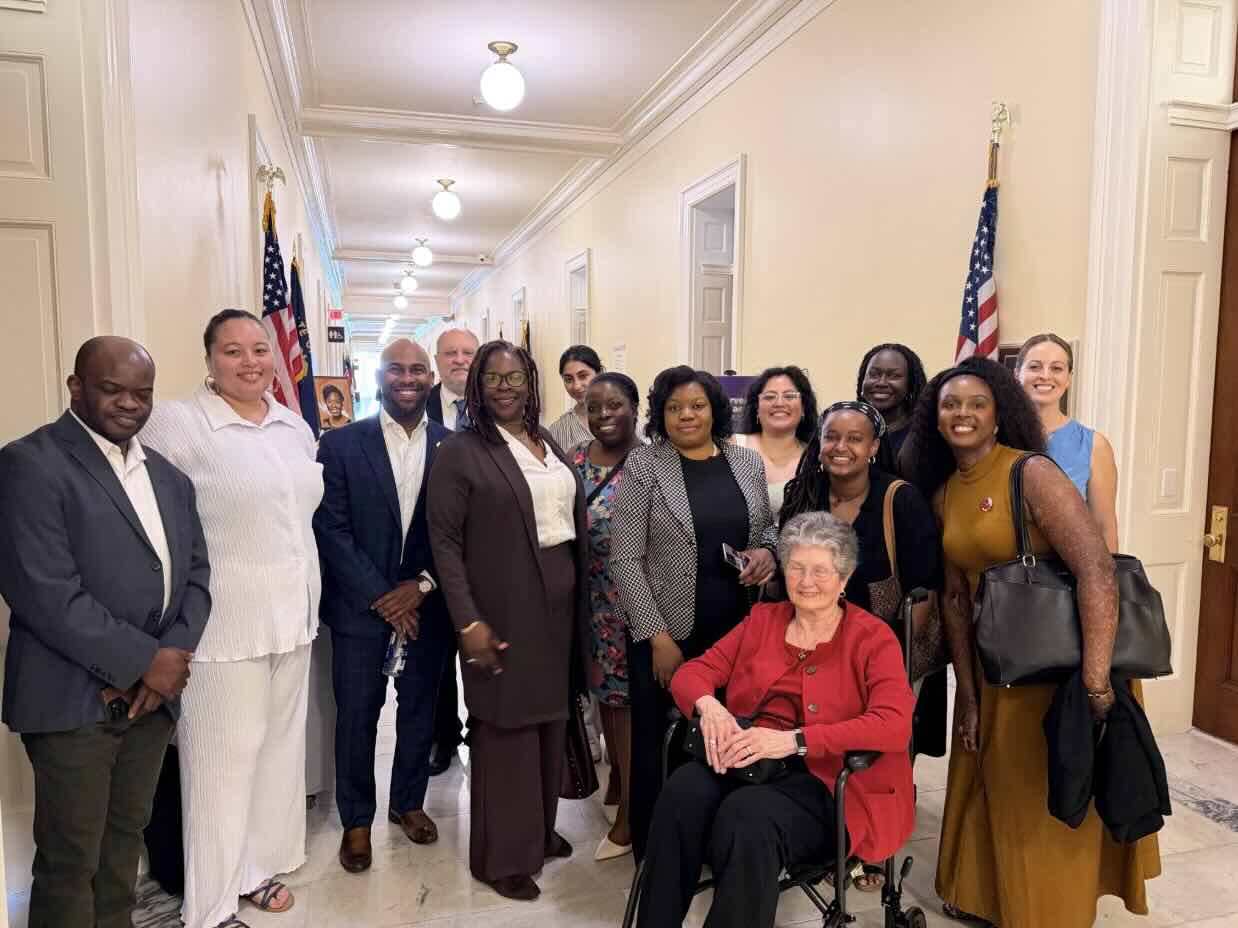
Members of the Care for Seniors Care for America coalition were at the Capitol Thursday for the vote
The Washington Post included ABIC in its coverage: House Defies Trump on Immigration with Move to Shield Haitians
Rep. Pressley also mentioned ABIC in her remarks on the floor of the House: “I’m grateful for labor unions like SEIU, business industry like ABIC, faith leaders like the Conference of Catholic Bishops, civil rights groups like Black Lives Matter Grassroots, IFSI, and so many more have joined the movement to extend TPS for Haiti.”
If TPS protections do expire, over 350,000 Haitians will face deportation, destabilizing care facilities, local economies, and the businesses that depend on their labor, leaving vulnerable seniors without the consistent care they deserve and employers across critical industries without workers.
“These are people that came here legally under distress and who become part of the fabric of our country,” said Rob Liebreich, President and CEO of Goodwin Living, an ABIC Impact Leader of 2025 and a partner in Care for Seniors. “I’m so excited about this news because it gives us a little bit of hope that we see the realities that are in front of us– A huge growing population of older adults who will need a lot of hands-on care.”
Watch his video response on ABIC Action’s Tiktok, Instagram and X:
“The seniors who depend on these workers cannot afford to lose them,” said Rebecca Shi, ABIC Action CEO in a statement. “Removing law-abiding, long-term, hardworking immigrants from the equation will exacerbate the economic problems many Americans are already facing.”
ABIC Action now calls on the Senate to use every available tool at its disposal to finish the job.
CTA: Please send a “Thank-You” to ALL Supporters.
More from the ABIC Network:
Watch: “Is the Dignity Act “Amnesty?” Austin Kocher in Conversation with Ashley DeAzevedo and Rebecca Shi
Immigration researcher, data expert and policy analyst Austin Kocher interviewed Ashley DeAzevedo, Executive Director of AFU Action and Rebecca Shim CEO of ABIC Action, about the Dignity Act. DeAzevedo called the Dignity Act a “brilliant bill” and said the “American Families United Act is a piece of this legislation that would provide the opportunity for U.S. citizens to bring their spouse before a judge and have their cases heard…so they don’t have to choose between their country and their spouse.”
News Briefing:
WSJ: Trump Allies With Ties to His Private Clubs Pushed for More Work Visas
After initially planning to cut H-2B seasonal worker visas nearly in half, Trump reversed course and authorized close to the maximum 65,000 additional visas for FY2026. The reversal followed a direct lobbying effort at one of Trump’s Florida golf clubs, where associates with ties to his businesses made the case that the hospitality industry needed more workers. Congressional allies like Rep. Andy Harris (R-MD-1) also pushed hard for the expansion and business-friendly voices argued the economy depends on it. Trump’s own properties have long relied on H-2B workers and continue to seek them.
Related coverage from Politico: The Trump ally cracking down on immigration in Washington — and bringing in foreign workers back home
Rep. Harris (R-MD-1) is a hardline Trump immigration ally who simultaneously lobbied the White House to maximize H-2B guest worker visas because his Eastern Shore district depends on Mexican workers to hand-pick Chesapeake blue crabs. He successfully helped push the administration to reverse a planned cut, securing roughly 65,000 visa slots for the season.
“This is not an immigration issue — this is a temporary foreign worker issue,” Harris said.
Cato Institute: Trump Has Cut Legal Immigration More Than Illegal Immigration
Despite the administration’s focus on illegal immigration, President Trump has actually cut legal immigration far more. Legal entry reductions are roughly 2.5 times larger than reductions in illegal entries.
Key legal immigration cuts include:
- Asylum seekers entering legally: down 99.9%
- Refugees: down ~90%
- Immigrant visas for legal permanent residents: down ~50%
- Spousal/fiancé visas for U.S. citizens: down 65%
- International student visas: down 40%
- H-1B skilled worker visas: down ~25%
“These cuts to legal immigration are harming US citizens seeking to reunite with their spouses, fiancés, children, and other relatives. They are also undermining US prosperity and increasing the US deficit,” wrote author David J. Bier.
Farmers say the H-2A agricultural guest worker program is more essential than ever, especially after Trump’s immigration crackdown reduced the potential labor pool. The administration recently cut H-2A wage rates, which pleased farmers but drew opposition from both labor unions arguing it slashes worker pay and drags down domestic farm worker wages, as well as “America First” groups like the Heritage Foundation that oppose the program entirely.
A better solution might be on the way though, reported NPR: “Bills in both the House and the Senate, backed by both Democrats and Republicans, would make the H-2A visa system cheaper and easier for farmers to find legal, foreign guest workers willing to do the hard, dirty work of growing food in America.”
Perspectives:
Zippy Duvall, President of the American Farm Bureau Federation in WSJ: Strong Farms Start With Legal Foreign Labor
Duvall wrote a response to a WSJ article on the farming labor shortage due to the immigration enforcement crackdown. “Americans prefer other jobs over the hard work of farming,” Duvall said of the harsh realities farmers face in finding labor.
Foreign guest workers legally fill critical farm roles, but current rules limit them to seasonal work, leaving farmers who need year-round help without options. The result: more foreign food imports, a shift away from labor-intensive crops, rising produce prices, and thousands of dairy farms closing.
“A majority of Americans support farmers having access to legally hired foreign workers. The president and Congress must pass long-overdue legislation that reduces costs, allows guestworker access for all of agriculture and provides the stability our farmers, agricultural workforce and America’s families deserve,” Duvall wrote.
WaPo Editorial Board: America’s worker shortage is now a crisis
“Evidence of worker shortages is everywhere: from cattle operations in Kansas to the crawfish industry in Louisiana. Restaurants and hotels report more than 900,000 vacant jobs. More than half of dine-in restaurants surveyed by the National Restaurant Association report fewer applicants for “kitchen-support positions” in 2025,” the Editorial Board wrote.
The growth of AI is also creating new infrastructure demands, including 500,000 electricians needed in just two years.
While the administration has made modest adjustments like expanding temporary worker visas, these are insufficient fixes, says the Board.
“The best way to reduce illegal immigration is to create easier legal pathways for people who want to fill jobs that otherwise sit vacant.”
Get Involved
- Join one of ABIC’s Councils of 100 and let your voice be heard with your peers – sign up here. The Council of 100 is a coalition of top business leaders working to advance common-sense workforce solutions.
- Share your story: If your business is interested in engaging with the press as part of ABIC or amplifying your story on social media, take this quick survey to let us know your preferences.