
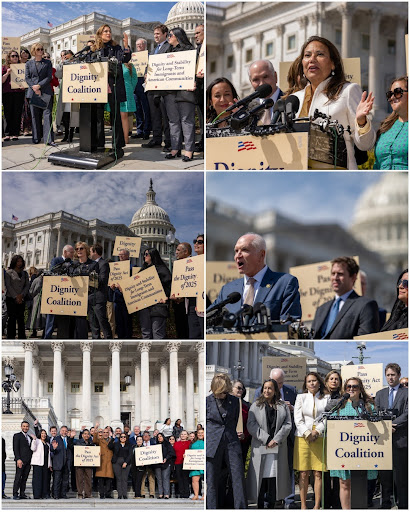
Bipartisan momentum is building for The Dignity Act of 2025, with 40 cosponsors (20 Republican lawmakers and 20 Democratic lawmakers) supporting work permits for undocumented immigrants and other measures contained in the proposal.
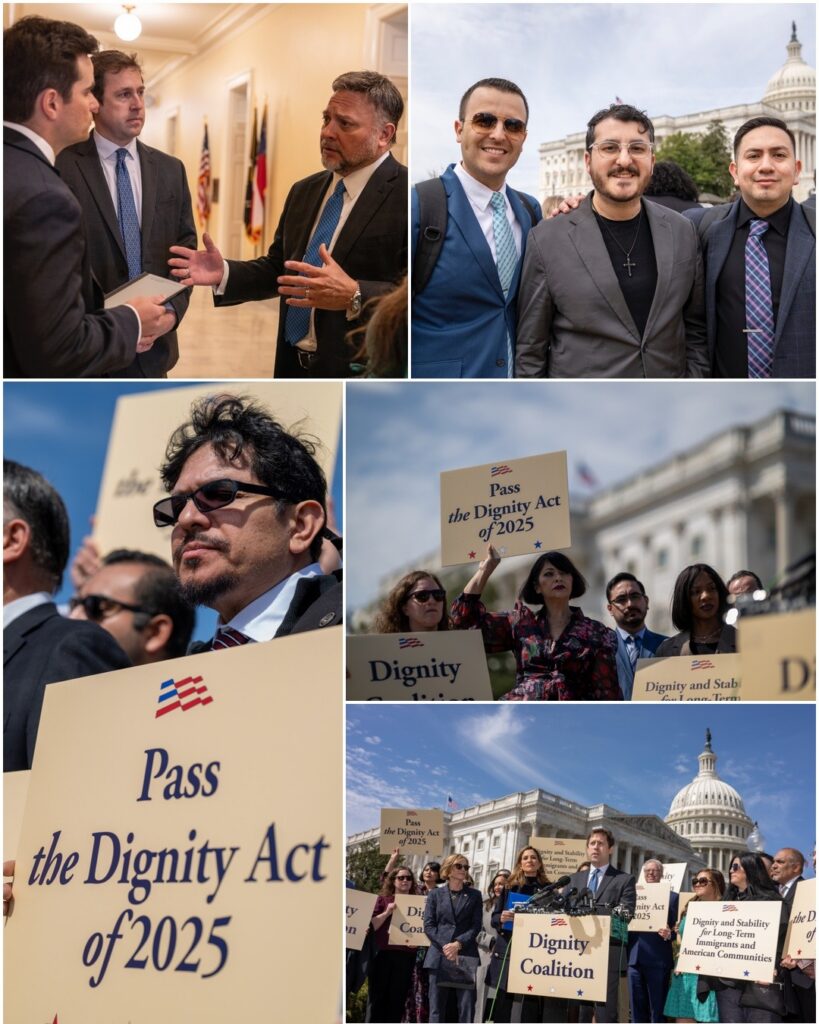
The American Business Immigration Coalition Action (ABIC Action), the National Hispanic Christian Leadership Conference (NHCLC), American Families United Action (AFU Action), and other organizations convened a press conference at the Capitol in support of the Dignity Act Wednesday, and launched a national “Dignity Tour” urging Congress to pass the legislation.
Watch the full press conference here, and see highlights of our speakers, including U.S. Representatives Maria Elvira Salazar (R-FL-27), Veronica Escobar (D-TX-16), Mike Kelly (R-PA-16), Rep. Monica de la Cruz (R-TX-15), and Susie Lee (D-NV-3) on ABIC Action’s Instagram, X, Facebook or Tiktok.

The Dignity Act provides a pragmatic and balanced immigration solution that secures the workforce, grows and protects the economy, lowers costs for American families and invests $70 billion in U.S. workers.
More than 75 endorsing organizations will convene on-the-ground events across the country in support of the legislation, and the first one kicked off Wednesday night: a packed town hall in Reading, Pennsylvania hosted by Comité de 100 to educate voters about the bill and answer questions.
Watch coverage of the event from WFMZ-TV 69 News and watch highlights from Enrique Sanchez, Intermountain State Director for ABIC at the event:
Events are being scheduled in Arizona, Nevada, Pennsylvania, Texas, and other key states to build support for the Dignity Act.
The Dignity Act presents a rare opportunity to achieve what previous administrations and Congresses have not: durable, bipartisan immigration solutions that reflect both our workforce needs and American values.
The Dignity Act:
-Secures the workforce
-Grows and protects the economy
-Lowers costs for American families
-Invests $70 billion in U.S. workers.
Join the Dignity Tour.
More from the ABIC Network:
Hispanic Business Leaders and Elected Officials: “Respect Our Vote, Deliver on Work Permits for Immigrants”
On Monday, Comité de 100 and ABIC Action were joined by local elected and business leaders in Harris County, Texas to call on federal lawmakers to support common-sense immigration reform that provide long-term, law-abiding undocumented immigrants legal work permits and citizenship for Dreamers, like the Dignity Act and the Dream Act, ahead of the 2026 midterm. Watch a recording of the event here and see highlights from some of the speakers below:
Hispanic voters represent a quarter of the Texas electorate and 51% of Hispanic voters in Congressional District-9 (which includes parts of Harris Country), making them a decisive voting block in this November’s midterm elections. The historic surge in Hispanic voters in the Hispanic-majority Congressional District-9, partially in response to immigration enforcement overreach, was flagged as a wakeup call to elected officials.

Recent research from ABIC Action demonstrates how this trend could potentially reshape or flip four new Hispanic-majority congressional districts in Texas this November.
WSJ: Trump’s Deportation Push Takes an Economic Toll on Mixed-Status Families
Nearly 4 million households in the U.S. include a mix of legal statuses, with at least one resident living in the U.S. unlawfully and at least one other here lawfully. WSJ featured ABIC’s long-time partner organization American Families United and the stories of mixed-immigration status families.
American citizen Amanda Souza Ribeiro filed for bankruptcy after her husband was detained and deported to Brazil and his company collapsed in his absence. She also had to apply for food stamps and Medicaid, and she and their four American-born children also had to give up their house.
“Losing him shattered the very foundation of our home,” said Amanda, 43 years old. “He was our rock.”
Removal of noncitizen spouses takes an economic toll, both on their U.S. citizen spouses and children and also the sectors in which they are employed, but there currently are many roadblocks to legal status for mixed-status families. If passed, the Dignity Act would create a legal pathway for immigrant spouses of U.S. citizens to regularize their status.
News Briefing
Bloomberg: New Census Data Shows More U.S. Counties With Population Drops Under Trump’s Immigration Crackdown
Four in 10 U.S. counties shrank last year as the president’s immigration crackdown hit the nation’s main source of population growth.
Some 1,270 counties lost residents in the year to July 1, 2025, according to Census Bureau figures out Thursday, nearly 20% more than the same period in the prior year.
International migration has long helped keep the US population expanding as Americans grow older and new generations have fewer children. But the Census Bureau also estimates net international migration will drop to 321,000 in 2026 if trends continue, from a peak of 2.7 million in 2024.
The impact is concentrated in large immigrant hubs. Counties containing Los Angeles, Miami, Dallas, San Diego, and New York saw some of the steepest declines. Harris County, which includes Houston and its suburbs, saw its growth rate cut in half.
The Wall Street Journal mapped the changes in growth rate:
About two-thirds of U.S. counties already see more deaths than births. Without immigration, population loss in those areas will grow and have downstream consequences for labor markets, tax bases, housing demand, and local economies.
Related coverage from the Washington Post: Under Trump, Legal Immigration to U.S. Is Falling From Most Countries
The United States issued about a quarter million fewer visas in the first eight months of 2025 compared with the same period in 2024, a reduction of about 11%.
For the first time in at least half a century, more immigrants left the U.S. than entered last year, WaPo reported. The Federal Reserve has already linked the trend to weaker job creation, and economists warn the effects compound over time.
“There’s no policy more important to the present and future of the U.S. economy than immigration,” said Harvard University professor Jason Furman.
News from the Capitol:
CBS: Markwayne Mullin Sworn in as DHS Secretary After Senate Confirmation
Markwayne Mullin was sworn in as DHS Secretary on Tuesday, taking over a department that has been partially shut down for nearly 40 days as Democrats withhold funding over immigration enforcement concerns.
Mullin signals a meaningful shift in part of his approach: he has said agents will be required to obtain judicial warrants before entering homes and businesses, which is a notable departure from DHS’s previous position under Kristi Noem.
Axios: Senate Dems plot immigration offensive
Senate Democrats are preparing to use the Congressional Review Act to force a vote reinstating automatic work permit renewals for hundreds of thousands of immigrants, a policy the Trump administration reversed last year. The move is being led by Sen. Jacky Rosen of Nevada, a moderate from a state Trump won.
“At a time when costs are going up and our economy is being weakened, this ill-conceived rule will make matters worse and hurt thousands of hard-working families,” Rosen said.
Democrats know the resolution would likely pass only to be vetoed by Trump, but the real goal is to put Republicans on record opposing a policy Democrats can frame as harmful to the economy and working families, particularly as immigration backlogs are forcing immigrants out of jobs and affecting U.S. businesses.
Healthcare Impacts:
Immigration Changes Worsening Doctor Shortages, Especially in Rural and Underserved Communities
Axios reports that the Trump administration’s freeze on immigration benefit processing is forcing foreign-born doctors, who make up about a quarter of the U.S. physician workforce, out of work, worsening an already serious physician shortage. Rural and underserved communities are hit hardest since they rely most heavily on immigrant doctors.
When work authorization renewals get delayed or frozen, doctors lose their ability to practice even if they’re legally in the country. They’re left with few options: return home, move to another country, or stay in the U.S. unable to work.
The New York Times also reported on bipartisan efforts in the House to eliminate the $100,000 H-1B visa fee the Trump administration imposed on employers hiring foreign workers when those workers are healthcare professionals like doctors and nurses.
The U.S. already faces a projected shortage of up to 86,000 physicians by 2036, and immigrant doctors are disproportionately the ones filling gaps. Immigrant nurses are equally critical, making up one in six of all registered nurses nationally. The bill, sponsored by two Republicans and two Democrats, has the strong backing of the American Medical Association, which is urging Congress to act quickly before the summer hiring cycle is disrupted.
Minnesota’s caregiving workforce was already short-staffed. Then ICE came.
Minnesota’s caregiving sector, which is already critically short-staffed, is being further destabilized by ICE enforcement and the broader climate of fear it has created.
Immigrants and refugees make up roughly 30% of the long-term care workforce, filling jobs in group homes, disability services, child care, and elder care that Minnesota simply doesn’t have enough domestic workers to fill. The ICE surge pulled workers out of that pipeline through detention, self-deportation, and fear.
Get Involved
- Join one of ABIC’s Councils of 100 and let your voice be heard with your peers – sign up here. The Council of 100 is a coalition of top business leaders working to advance common-sense workforce solutions.
- Share your story: If your business is interested in engaging with the press as part of ABIC or amplifying your story on social media, take this quick survey to let us know your preferences.
Always available: ABIC Employer Resources Folder
ABIC in the news. . .
- CBS: Texas DACA Recipients on Edge Awaiting Work Authorization Ruling (2/26/26)
- Politico: ‘South Texas will never be red again’: Home builders warn GOP over Trump’s immigration raids (2/14/26)
- The Washington Times: Hispanic groups warn Trump’s ICE surge could ‘nullify’ GOP’s Texas congressional goals (2/13/26)
- Wall Street Journal: Immigration Raids in South Texas Are Starting to Hit the Economy (2/9/26)
- Dairy Herd Management: Operating in the Shadows: Why the Dairy Workforce Crisis is a Threat to National Food Security (2/9/26)
- The Bulwark: Why Trump’s Attack on Refugees Could Hurt Grandma (2/8/26)
- El Diario NY: Estadounidenses casados con indocumentados enfrentan dificultad para obtener una Green Card (2/8/26)
- WFLX: Judge blocks Trump’s end to Haitian protections, but local businesses still feel impact (2/2/26)
- CNN: Many Haitians may soon not be able to work in the US. That will make caring for the elderly much harder (2/1/26)
- Axios: Miami community leaders ask for extension of TPS protections for Haitians (1/30/26)
- Progressive Farmer: Farm Labor Anxiety Persists in California (1/30/2026)
- Miami New Times: South Florida Community Leaders Call to Preserve Haitian TPS (1/28/26)
- CBS News: Haitian community pleads to keep TPS as expiration looms in South Florida (1/27/26)
- CBS News: Miami leaders push to stop end of TPS for Haitians (1/27/26)
- Miami Herald: With TPS deadline near, South Floridians urge Trump administration to protect Haitians (1/27/26)
- WSVN: Archbishop of Miami shows support for Haitian migrants as temporary protected status set to expire next week (1/27/26)
- NBC 6 News: Faith and health leaders issue warning as end of TPS for Haitians approaches (1/27/26)
- Local 10 News: South Florida officials concerned over looming impact of revoking TPS from Haitians (1/27/26)
- The Fence Post: Will Minnesota tragedies lead to immigration reform? (1/27/26)
- ModernRetail: Retailers, brands face a test: Oppose ICE or stay quiet while thousands protest (1/27/26)
- NBC6: Archdiocese of Miami holds new conference as end of TPS for Haitians approaches (1/27/26)
- Miami New Times: Miami Religious, Political Leaders Call to Preserve Haitian TPS (1/27/26)
- El Pais: Trump wants to change Americans’ diets, but his deportations are making it impossible (1/23/26)
- HaitiLibre: Democrats try to force a vote on extending TPS for Haiti (1/23/26)
- Miami Herald: Members of Congress sound alarm over end of Haiti’s TPS status, push for relief (1/22/26)
- The New Republic: There Is No Bigger Kitchen-Table Issue Than ICE Violence (1/21/26)